

Table of Contents
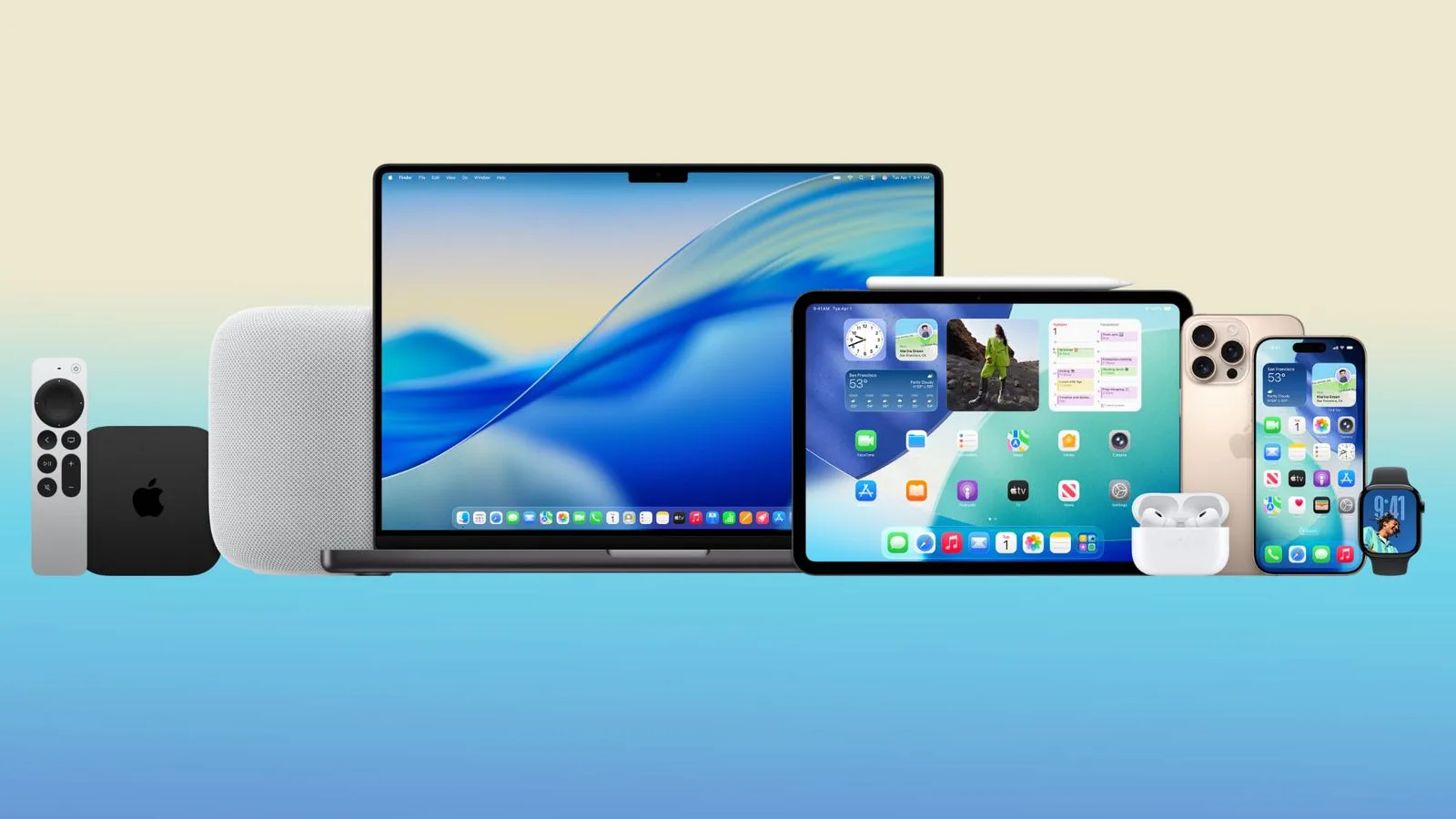
Apple’s Apple product roadmap 2026 is shaping up to be a year of major platform transitions: next‑gen Apple Silicon across the Mac, a new iPhone cycle built around a more advanced chip and modem strategy, and a broader push into smart home hardware. Much of what follows remains rumor-level reporting, but the overall direction is consistent: Apple appears to be expanding its ecosystem while tightening control over key components (chips, connectivity, and devices that anchor daily use).
Below is a product-by-product look at what to expect across 2026, organized by Apple’s typical launch windows.
What Apple Product Roadmap 2026 signals
The clearest theme in Apple product roadmap 2026 chatter is “platform consolidation”: Apple keeps iterating on Apple Silicon and is reportedly continuing its transition toward more in-house components, including cellular modems. At the same time, 2026 is widely described as a “loaded” year for hardware breadth—more categories getting attention, not fewer.
Just as importantly, Apple’s timing strategy may evolve: rumors increasingly point to staggered launches across the year rather than everything peaking in September. If true, that could reduce pressure on the fall event while keeping Apple in the news cycle more consistently.
Spring 2026: Mac and iPad momentum, plus smart home ambitions
Spring is typically where Apple refreshes mainstream products (and occasionally introduces a new category), and reporting suggests 2026 will follow that pattern. The most important headline here is the next Apple Silicon wave: M5-class chips are expected to start appearing across consumer Macs around this time window.
M5 MacBook Air (13-inch and 15-inch)
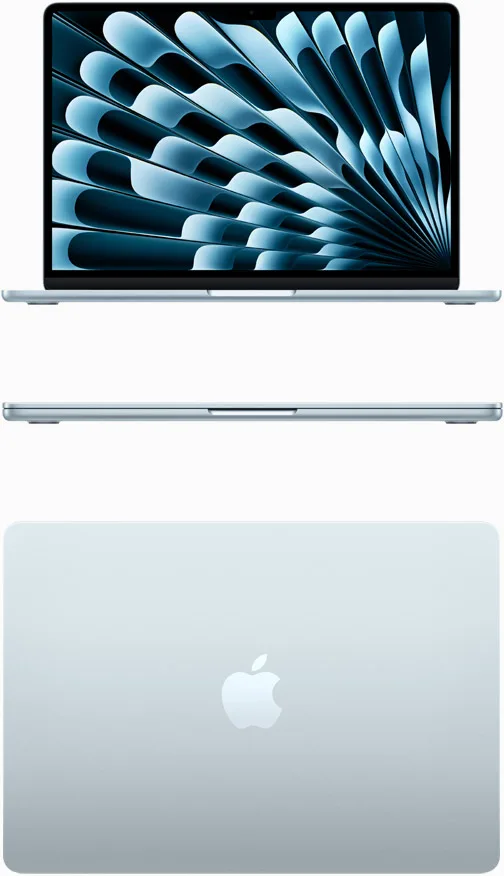
Multiple rumor timelines point toward the MacBook Air being among the first major laptops to move to M5. The expectation is a familiar design with internal upgrades: faster CPU/GPU performance and efficiency gains rather than a dramatic redesign.
If Apple sticks to its recent playbook, the practical improvements users will feel most are:
- Better sustained performance for everyday creative workflows (photo batches, 4K timelines, multi-app work).
- Longer battery life driven by efficiency gains, not bigger batteries.
- Connectivity updates (often incremental, but meaningful for modern networks and peripherals).
Entry iPad refresh (and “baseline AI readiness”)
Some 2026 roadmaps also point to iPad updates that keep the lower end of the lineup current with Apple’s software ambitions, mainly by ensuring modern chips and memory baselines across the range. The practical intent is to prevent the entry iPad from feeling like a “different class” of device from iPad Air and iPad Pro in everyday use.
The rumored Apple smart home display (“home hub”)
A new Apple smart home display—often framed as a HomeKit-centered screen or “smart home hub”—has been widely discussed as a potential 2026 product. The pitch is straightforward: an always-on household display for HomeKit control, quick glances (weather, reminders), communication, and media, positioned against Amazon Echo Show and Google Nest Hub-style devices.
If Apple ships such a product, it would likely be less about “inventing” the category and more about making the Apple ecosystem easier to live in—especially for families who want HomeKit control without pulling out an iPhone every time. It would also give Apple a physical “anchor” in the home that is more interactive than a HomePod and more purpose-built than leaving an iPad on a stand.
WWDC 2026: Software sets the tone, but hardware does the selling
WWDC is mainly about software, but it often shapes how buyers think about upcoming hardware—especially Macs and iPads that benefit from new OS capabilities. For the Apple product roadmap 2026, WWDC matters because it can validate Apple’s direction: on-device intelligence, tighter device integration, and new experiences that reward newer silicon.
Even when Apple doesn’t announce a product on stage, WWDC is where the company can quietly justify why the next MacBook or iPad generation is “worth it.” In recent years, that has often meant leaning into performance-per-watt, machine learning acceleration, and ecosystem continuity (handoff-style workflows, shared device states, and continuity features).
Fall 2026: iPhone 18 era and Apple’s next connectivity steps
September is still expected to be the center of gravity for Apple’s year, and the iPhone 18 line is the obvious focal point. Early reporting frames 2026 iPhones as less about radical exterior design and more about component strategy—chips, modems, camera refinements, and long-term platform control.
iPhone 18 Pro and Pro Max
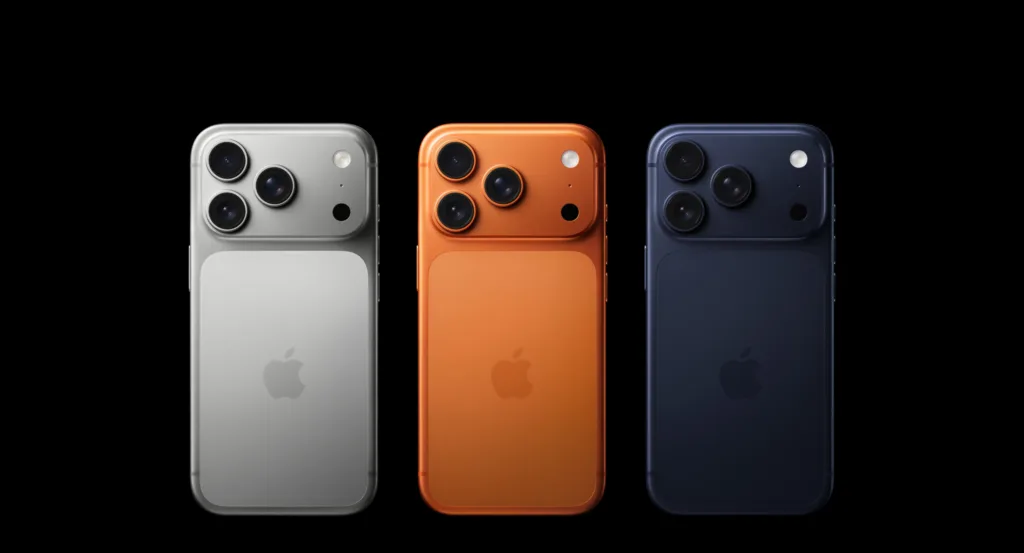
Rumor coverage around iPhone 18 models often focuses on the Pro tier as the first to receive meaningful architectural changes (new chip generation, new camera capabilities, and potentially new component sourcing decisions). Expectations vary by outlet, but the consistent idea is that Apple will keep pushing performance and efficiency, especially for computational photography/video and on-device processing.
For creators, the Pro models remain the ones to watch because they typically receive the most meaningful camera pipeline upgrades and the highest sustained performance headroom. Even when the sensor hardware changes are modest, Apple’s computational stack can shift the real-world results significantly—particularly in low light, HDR handling, and motion management.
Staggered iPhone launch timing (a bigger strategic story)
One of the most consequential rumors for Apple product roadmap 2026 is not a spec—it’s timing. Some reporting suggests Apple could increasingly stagger parts of the iPhone lineup across different launch windows, rather than releasing all variants together.
If that happens, it could signal two strategic priorities:
- Clearer segmentation (Pro = “fall headline,” non‑Pro = “later value wave”).
- A steadier rhythm of upgrades that keeps Apple in the market conversation beyond September.
This is still speculative, but it aligns with how Apple already spaces out iPad and Mac updates across the calendar.
Wearables 2026: Apple Watch expectations and the MicroLED question
Apple Watch rumors for 2026 are often dominated by display technology—specifically MicroLED—and whether it’s finally ready for prime time. The latest coverage suggests MicroLED remains challenging to commercialize at Apple’s scale and cost targets, which could push broader adoption out further.
Apple Watch Series updates (Series 12 conversation)
While there’s plenty of speculation around health sensors and design tweaks, the most repeated “big swing” topic is display tech—and the idea that MicroLED may still be delayed. If MicroLED slips, Apple can still deliver meaningful improvements via efficiency tuning, brighter OLED panels, and incremental battery/workload optimizations.
The practical point for buyers is that 2026 may be a year of refinement rather than reinvention in Apple Watch hardware—unless Apple surprises with a marquee health feature. That said, even “refinement years” can be significant if Apple improves real-world battery performance, display readability, or durability.
Spatial computing in 2026: A cheaper Vision headset enters the conversation
After the high-end Vision Pro established Apple’s spatial computing direction, reporting has increasingly focused on the next step: making the category more accessible. Several rumor narratives point toward a lower-cost Apple Vision headset arriving in 2026, positioned below Vision Pro on price and possibly features.
Apple Vision (lower-cost model)
The key trade-off implied by these reports is that Apple would cut cost by changing materials, simplifying the product, and potentially altering the compute approach while keeping the core “spatial computing” concept intact. The strategic goal would be clear: grow the install base so developers, content makers, and enterprise buyers can justify investing in spatial experiences.
If Apple can ship a meaningfully cheaper headset without compromising the core usability (comfort, clarity, latency), 2026 could be the year spatial computing shifts from “headline demo” to “real adoption curve.”
Late 2026: Pro Macs and the next Apple Silicon ladder
The pro end of Apple’s Mac lineup often updates on a slightly different rhythm than consumer laptops, and 2026 rumor coverage repeatedly points to M5-class upgrades reaching more performance-oriented Macs as the year progresses. One specific theme is that M5 MacBook Pro timing may skew later than some expect, depending on production schedules and Apple’s release priorities.
M5 MacBook Pro (14-inch and 16-inch)
Reporting suggests the M5 transition will extend to MacBook Pro models, but with timing that could land later in the cycle rather than early. For professionals, the meaningful questions are less about “Will it be faster?” and more about:
- Sustained performance under heavy loads (long renders, complex timelines, many effects).
- GPU throughput and media engine improvements that translate directly into export speed and playback smoothness.
- Thermal behavior that determines whether performance remains stable over time.
Even modest architectural changes can matter a lot to creative workflows because they reduce friction—less waiting, fewer proxies, fewer compromises on timeline resolution.
What to watch (and what to treat cautiously)
The Apple product roadmap 2026 is still a moving target, and it’s worth separating “pattern-based expectations” from “harder-to-believe leaps.” In general, chip and Mac refresh rumors tend to be more reliable than dramatic form-factor shifts, because they’re easier to track via supplier schedules and prior cadence.
Two categories to treat with extra caution:
- Brand-new device categories (like a smart home display) often change late in development, especially around positioning and launch timing.
- Display revolutions (like MicroLED) are notoriously difficult at scale, and timelines can slip repeatedly.
Still, the direction of travel is clear: Apple appears to be widening its ecosystem footprint while reinforcing the silicon advantage that now underpins nearly every product decision.
You may also be interested in this article: https://www.4newz.com/should-i-upgrade-to-iphone-17-pro-upgrade-2025/
Sources:
- https://www.macrumors.com/2025/12/16/apple-product-roadmap-2026/
- https://www.macrumors.com/2025/11/02/apple-to-launch-these-new-products-in-2026/
- https://www.macrumors.com/2025/10/08/m5-mac-launch-rumors/
- https://www.macrumors.com/2025/08/12/macbook-pro-with-m5-chips-2026-rumor/
- https://www.macworld.com/article/2953687/iphone-18-pro-2026-release-date-design-specs-rumors.html
- https://appleinsider.com/inside/iphone-18
- https://gizmodo.com/apple-2026-hardware-releases-2000698996
- https://apple.gadgethacks.com/news/apple-smart-home-hub-2026-revolutionary-ai-display/
- https://appleinsider.com/articles/24/10/13/cheaper-apple-vision-headset-rumored-to-cost-2000-arriving-in-2026
- https://www.microled-info.com/new-rumors-suggest-apple-still-aims-adopt-microled-displays-its-2026-smartwatch
- https://www.t3.com/tech/smartwatches/apple-watch-series-12-rumours-speculations-jan26